

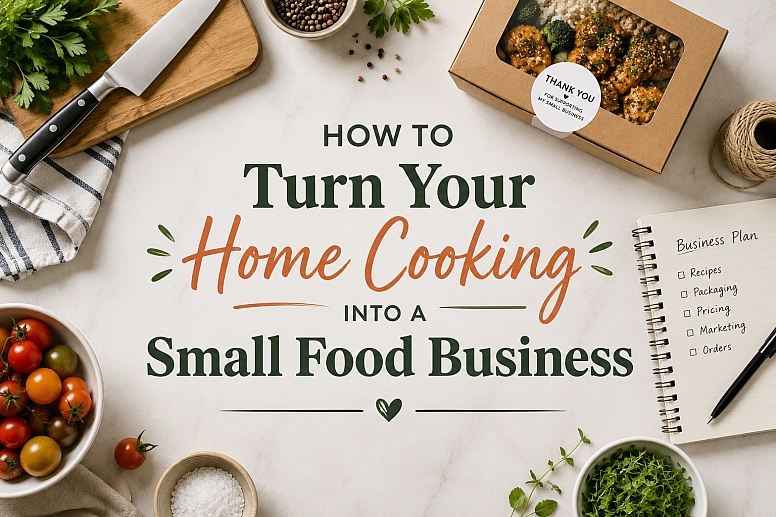
How to Turn Your Home Cooking into a Small Food Business
For busy parents, shift workers, and community cooks known for “bringing the good food,” a home-based cooking business can feel like the most natural way to start turning cooking skills into income. The hard part is that passion alone doesn’t cover the small food startup challenges that show up fast: rules, costs, consistency, and the pressure to sell enough to make it worth the time.
New food entrepreneurs often get stuck between dreaming big and not knowing what kind of starting a food business from home is actually realistic. With the right expectations and a workable model, home cooking can become dependable revenue.
Understanding Your Best Home Food Business Path
A workable home-based food business starts with picking one of three routes: meal prep, specialty baked goods, or small-event catering. Each path comes with different equipment needs, ingredient volume, packaging, and delivery demands. It also comes with different rule sets, since home kitchen compliance can range from cottage food-style sales to needing access to a licensed or inspected kitchen.
This matters because the wrong model can drain your budget fast, even if the food is excellent. Knowing typical startup costs and basic licensing categories helps you spend on what you must have first, not what looks professional.
Think of it like choosing a vehicle: baked goods can be the compact car, while the $72.67 billion catering market value can push you toward bigger gear and tighter timing. A small weekly meal-prep menu might need labels and containers, while an artisan cookie line can tap into the artisan bakery market size with fewer moving parts. With your direction clear, business education can sharpen pricing, marketing, and budget habits.
Build the Business Skills That Keep Your Kitchen Profitable
Once you’ve chosen a business model and accounted for basic costs and legal needs, the next step is making sure the numbers and day-to-day decisions actually support steady profit. Earning a business degree can help you plan and run a home-based cooking business more effectively by sharpening the skills that show up every week, tightening your pricing strategy, strengthening marketing fundamentals, and managing your budget with more confidence.
Whether you earn a degree in marketing, business, communications, or management, you can learn skills that can help your business thrive. And because online degree programs make it easier to keep cooking for customers while you learn, you can build your business and your education at the same time; see options linked here for reference.
Build Your First Profitable Menu and Get Orders

Your goal here is to pick one clear offer, prove people want it, and price it so each sale leaves money left over. This simple plan keeps you from overbuilding a menu and helps you reach your first paying customers faster.
- Choose a tight niche you can repeat weekly: Start with one style of food you can execute consistently, like lunch bowls, family trays, baked goods, or plant-forward meals. Aim for a niche that matches your strengths and is easy to produce in batches, since repetition is what makes home cooking profitable. If your idea fits a trend, note it, such as the plant-based food market, valued at USD 14.2 billion, but still focus on what you can deliver reliably.
- Validate demand with small, low-risk tests: Write a one-sentence offer and share it with real people: neighbors, coworkers, parent groups, local online communities, or your social media. Collect yes or no feedback, ask what they would pay, and take a few pre-orders before you buy extra ingredients. If you cannot get pre-orders, adjust the offer, portion size, or pickup day and test again.
- Set prices using a simple profit-first method: Calculate your per-order cost for ingredients and packaging, then add a set amount for your time and overhead, like utilities and delivery mileage. Choose a target profit per item and confirm the price still feels reasonable compared to similar options your customers already buy. If the number feels too high, simplify the recipe or reduce options instead of quietly underpaying yourself.
- Create a basic menu with one signature and two supports: Build a starter menu with one hero item, one budget-friendly option, and one premium add-on like a side, sauce, or dessert. Keep ingredients overlapping so you can prep once and use them across multiple items, which reduces waste. Write short descriptions that highlight the main benefit, such as high-protein, comfort food, or family-size.
- Lock in sourcing and a customer-getting routine: List your top ingredients, then confirm where you will buy them every week, what substitutes you will allow, and what your max cost per serving can be. Next, set a weekly customer pipeline by using customer acquisition tactics like a referral deal, a preorder deadline, and a consistent posting schedule with photos and pickup times.
Home Food Business FAQs (Licensing, Safety, Pricing)
Q: What licenses or permits do I need to sell food from home?
A: It depends on what you sell and how you sell it, so start by checking your city or county and health department rules. Many places treat shelf-stable baked goods differently from refrigerated meals. If you are unsure, ask specifically about home production, sales channels, and inspection requirements.
Q: How do I follow food safety regulations without getting overwhelmed?
A: Build a simple routine: clean and sanitize, track temperatures, prevent cross-contamination, and label allergens clearly. The public health impact is real, since foodborne hazards cause some 23 million cases of illness each year in Europe. Use checklists and keep a basic log so you can repeat the same safe process every cook day.
Q: What must be on my product labels?
A: Most products need the item name, net weight, ingredients in descending order, and allergen information. Some areas also require your business name and address, plus a cottage food statement. Snap a photo of your label draft and compare it against your local guidance before printing in bulk.
Q: Do I really need business insurance for a small food side hustle?
A: Insurance is a smart protection even for low-volume sales, especially if you deliver or sell at events. Ask brokers for product liability coverage and confirm it covers your exact foods and sales channels. Keep your receipts and batch notes too, since documentation helps if a claim ever comes up.
Q: How do I price my food when customers say it is “too expensive”?
A: First, confirm your true costs, including packaging, gas, and your prep time, so you are not unknowingly losing money. Then offer a smaller portion size or a simpler option that hits a lower price point without discounting your main item. If people still hesitate, it is useful feedback on the offer, not a verdict on your skills.
Q: How should I handle negative feedback without losing momentum?
A: Reply once, calmly, and thank them for specifics, then offer a clear fix like a replacement, refund, or credit with boundaries. Look for patterns across multiple buyers before changing recipes. Write one lesson you will apply next time, and keep selling, so one comment does not derail your progress.
Scale Your Home Food Business With Steady, Low-Cost Systems
It’s easy for a home food business to start feeling like a second full-time job once orders grow, costs creep up, and compliance management gets confusing. The steadier path is a mindset of sustainable business growth: reinvesting profits, reducing overhead costs, and scaling the home business through gradual business expansion rather than constant “more.”
Grow only as fast as your margins, energy, and compliance can comfortably support. Choose one small upgrade this week, tighten a simple process, set aside a reinvestment amount, or confirm your labeling and licensing are still current. That balance is what builds stability and keeps your cooking profitable for the long haul.
Categories
Recent Posts







0.1132