
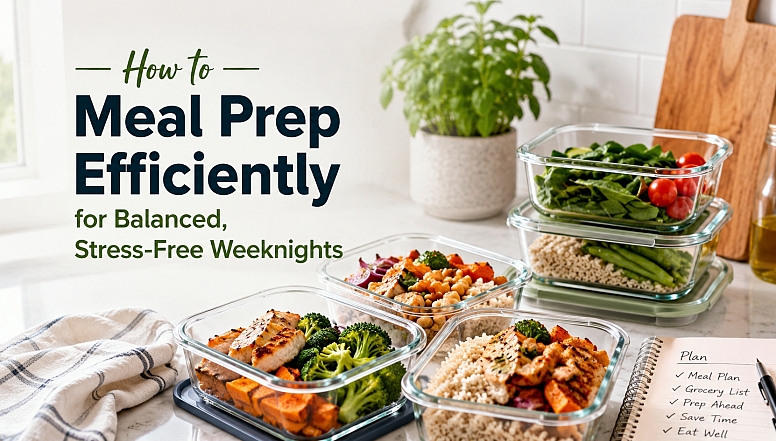
How to Meal Prep for Balanced, Stress-Free Weeknights
Busy professionals juggling meetings, commutes, and family responsibilities often hit the same wall at dinner: decision fatigue, a late start, and whatever happens to be fastest. Those time management challenges can quietly turn weeknight meal planning into a daily scramble, driving more takeout reliance than anyone intended.
Meal prepping benefits go beyond saving time; it creates a steady fallback that supports balanced nutrition even when the day runs long. With a little structure, weeknights can feel calmer.
Set Up a Simple Meal Prep Flow for Weeknights
This process helps you go from “What’s for dinner?” to a ready-to-assemble lineup of meals you can mix and match all week. It matters because a little planning up front saves time, reduces last-minute stress, and makes balanced eating feel realistic on busy nights.
- Pick 3–4 dinners and map the week.
Start with a short list of repeatable meals you actually like, then assign them to specific nights based on your schedule. Use a simple balance check: a protein, a fiber-rich carb, and at least one vegetable. Keep one “backup” option (like eggs or a freezer meal) for unpredictable evenings. - Build a grocery list from components, not recipes.
Write your list in categories: proteins, vegetables, carbs, sauces, and snacks so it’s faster to shop and harder to forget essentials. Choose ingredients that overlap across meals (like one grain and two versatile veggies) to cut cost and waste. If you want a clear starting point, plan out your meals, cook some of them in bulk so your list stays focused and prep time pays off. - Batch cook the “anchors” first.
Cook 1–2 proteins (chicken, beans, tofu), one big veggie roast or sauté, and one carb (rice, quinoa, potatoes) to create grab-and-go building blocks. Season simply, then rely on sauces and toppings to keep flavors varied. This gives you flexible pieces that turn into bowls, wraps, salads, and plates in minutes. - Run a smart prep session with a quick sequence.
Start with the longest cook times first, such as oven trays, a slow simmer, or a pressure-cooker item, then chop, wash, and cook faster foods while those run. Keep your counter set up like an assembly line: cutting board, sheet pan, containers, then labels. You finish sooner because you avoid waiting around and re-cleaning the same tools. - Portion, store, and label for easy weeknight wins.
Divide food into meal-sized containers so dinner is a reheat or quick assemble, not a second cooking session. Use clear containers for “see it and eat it” visibility, and choose leakproof lids for anything saucy. Label with the day or meal name so you don’t waste time guessing when you’re tired.
Turn Your Favorite Meal Plan Into a Reusable Spreadsheet Template
Once you’ve got a basic prep flow, a simple digital template can keep all those decisions in one place week after week. Creating a reusable spreadsheet for your favorite meal plan makes planning and prepping feel lighter: you can organize recipes in a single view, map out portions so you’re not guessing at servings, and build a grocery list you can copy, tweak, and reuse. It also gives you an easy spot to note nutrition details you care about, so you can stay consistent without doing extra math every time.
Converting a static meal plan or shopping list into an editable spreadsheet is a quick way to add flexibility and efficiency, especially when your schedule (or cravings) changes midweek. If your current plan lives in a PDF, tools to convert PDF to Excel online can make meal planning easier by letting you adjust quantities, swap items, and personalize your list in minutes. With that foundation in place, the next step is making the whole process feel so repeatable that it still works when your week gets busy.
Habits That Keep Weeknight Meal Prep Repeatable
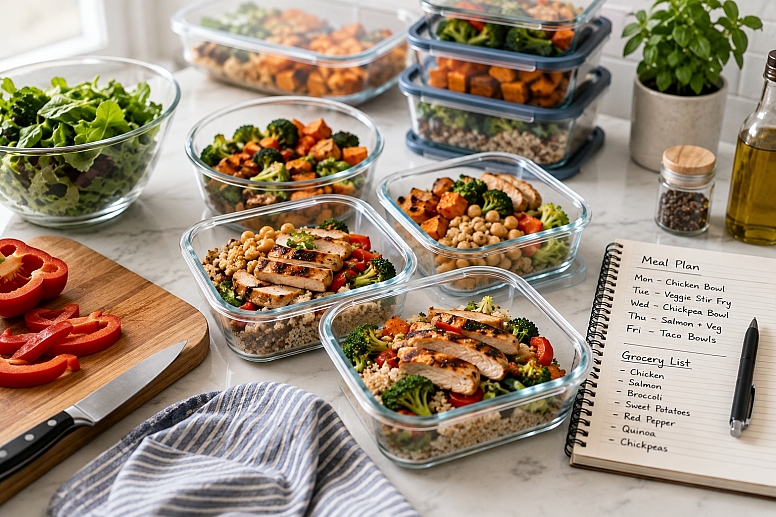
These habits turn meal prep from a one-time burst into a steady rhythm you can repeat even in busy weeks. Pick the ones that feel easiest, then let consistency, not perfection, carry you toward balanced, stress-free dinners.
Two-Recipe Rotation
- What it is: Alternate two go-to dinners each week, with one new “try-it” slot.
- How often: Weekly
- Why it helps: Decision fatigue drops, and variety still shows up.
Prep Anchors First
- What it is: Batch one protein, one grain, and two vegetables as your core building blocks.
- How often: Weekly
- Why it helps: Mix-and-match components create fast, balanced plates.
15-Minute Midweek Reset
- What it is: Do a quick fridge scan and top up one staple and one veggie.
- How often: Midweek
- Why it helps: Prevents the “nothing to cook” scramble on late nights.
First-In, First-Out Fridge Rule
- What it is: Put older items at eye level and newer items behind them.
- How often: Daily
- Why it helps: Less waste supports greenhouse gas emissions reduction over time.
Dinner Assembly Script
- What it is: Use one formula: bowl, salad, taco, or stir-fry with your prepped components.
- How often: Weeknights
- Why it helps: You cook less and still eat well.
Meal Prep Questions People Actually Ask
Q: How can meal prep actually save time if Sundays are already busy?
A: Keep the session short and focused: prep just 2 to 3 components that make multiple dinners. Start by portioning proteins and chopping a veggie or two, then use quick-cook methods (sheet pan, skillet, rice cooker) later. Even a 25-minute prep can remove the nightly scramble.
Q: What’s the safest way to store prepped food so it still tastes good?
A: Cool hot foods quickly, refrigerate promptly, and reheat leftovers until steaming hot. The FDA’s food-safe meal prep guidance is a solid baseline for avoiding cross-contamination and keeping your fridge routine simple.
Q: How do I avoid getting bored eating the same thing all week?
A: Change the flavor, not the whole meal: rotate sauces, spice blends, and toppings (salsa, pesto, tahini, chili crisp). Swap the “format” too, like turning the same chicken and veggies into tacos one night and a grain bowl the next.
Q: What should I prepare first if I’m a total beginner?
A: Start with the easiest meal to prep so you build confidence fast, often breakfast or lunch. Then apply the same idea to dinner by prepping one reliable protein and one side you already like.
Q: Can I meal prep if I have picky eaters or different dietary needs at home?
A: Yes, aim for “build-your-own” dinners with a few neutral basics, like a plain protein, a grain, and two veg options. Let each person add their own sauce, cheese, beans, or crunch so one prep works for everyone.
One Small Meal Prep Habit for Calmer, Balanced Weeknights
Weeknights get chaotic fast, and it’s easy to default to whatever’s quickest instead of what supports balanced eating habits. The mindset here is simple: lean on meal prepping benefits by doing a little ahead of time, so dinner decisions don’t pile onto an already-full day. With even a modest next week meal plan, stress reduction through prep starts to feel real, and eating well becomes more consistent without needing perfection. Small prep done on purpose makes healthy choices the easiest choices.
Categories
Recent Posts







0.1013