
Easy Daily Habits That Elevate Your Head-to-Toe Wellness
Busy home cooks and global‑cuisine lovers often pour care into meals for everyone else, then feel stuck when everyday well‑being slips between grocery runs, prep time, and late cleanups. The challenge isn’t motivation, it’s the overwhelmingness of trying to “get healthy” all at once, especially when dietary restrictions and ingredient sourcing already take so much energy.
Head‑to‑toe health strategies offer a calmer approach: holistic health habits that support flexibility, mindfulness, and restorative sleep in ways that fit real mornings and nights. Small, steady choices can help the body feel more comfortable, the mind more settled, and the day more doable.
Quick Wellness Takeaways
- Start each day with a simple stretching routine to loosen your body from head to toe.
- Build a calming bedtime routine that supports better sleep and steadier daily energy.
- Drink water regularly throughout the day to support hydration and overall body function.
- Follow basic skin care and oral hygiene habits to protect your skin, teeth, and gums.
- Add small mental wellness activities to manage stress and feel more balanced day to day.
Keep Your Mind Growing With Lifelong Learning
Once you’ve got your daily basics in place, keeping your brain engaged is another simple way to support overall well-being.
Lifelong learning helps improve mental well-being by keeping your mind active, encouraging personal growth, and building confidence as you master new ideas and skills. It can also ease stress by giving your attention a positive focus and reminding you that you can make steady progress over time. If you want more direction, look for a program that fits your career needs.
Maybe you’re aiming for a business bachelor’s degree to strengthen skills in accounting, business, communications, and management. Here’s a useful overview that can help you see what that path includes. No matter your career track, earning an online degree can offer flexible learning that works around real life while still helping you build momentum toward your goals.
Next, we’ll pull these ideas into a head-to-toe routine that’s realistic enough to repeat.
Head-to-Toe Rituals You Can Repeat All Week
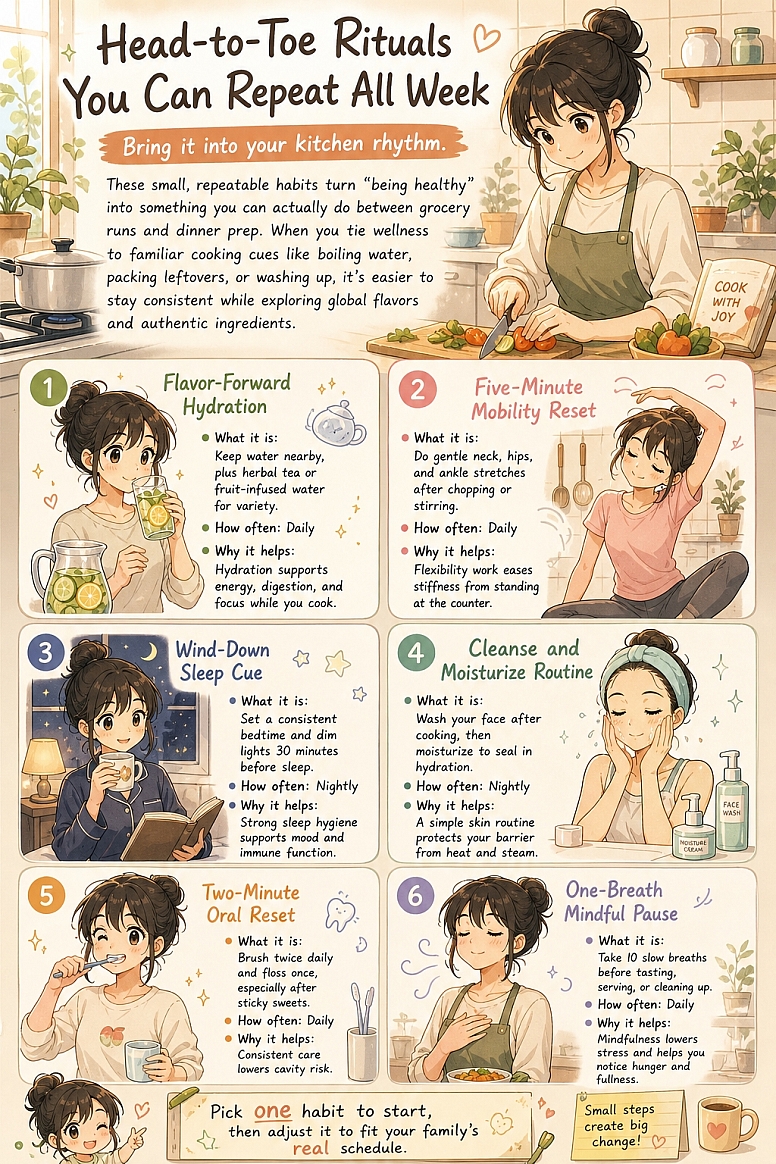
Bring it into your kitchen rhythm.
These small, repeatable habits turn “being healthy” into something you can actually do between grocery runs and dinner prep. When you tie wellness to familiar cooking cues like boiling water, packing leftovers, or washing up, it’s easier to stay consistent while exploring global flavors and authentic ingredients.
Flavor-Forward Hydration
- What it is: Keep water nearby, plus herbal tea or fruit-infused water for variety.
- How often: Daily
- Why it helps: Hydration supports energy, digestion, and focus while you cook.
Five-Minute Mobility Reset
- What it is: Do gentle neck, hips, and ankle stretches after chopping or stirring.
- How often: Daily
- Why it helps: Flexibility work eases stiffness from standing at the counter.
Wind-Down Sleep Cue
- What it is: Set a consistent bedtime and dim lights 30 minutes before sleep.
- How often: Nightly
- Why it helps: Strong sleep hygiene supports mood and immune function.
Cleanse and Moisturize Routine
- What it is: Wash your face after cooking, then moisturize to seal in hydration.
- How often: Nightly
- Why it helps: A simple skin routine protects your barrier from heat and steam.
Two-Minute Oral Reset
- What it is: Brush twice daily and floss once, especially after sticky sweets.
- How often: Daily
- Why it helps: Consistent care lowers cavity risk.
One-Breath Mindful Pause
- What it is: Take 10 slow breaths before tasting, serving, or cleaning up.
- How often: Daily
- Why it helps: Mindfulness lowers stress and helps you notice hunger and fullness.
Pick one habit to start, then adjust it to fit your family’s real schedule.
Everyday Wellness Habit FAQs for Home Cooks
Kitchen-life questions come up, and they are totally normal.
Q: How do I stay consistent when dinner gets hectic?
A: Attach one habit to a non-negotiable step you already do, like waiting for water to boil or putting leftovers away. Keep the goal tiny: one glass of water, one stretch, or one mindful breath. If you miss a day, restart at the very next meal.
Q: What can I do for stress when I’m juggling new recipes and family needs?
A: Try mindful showering or a slow hand-wash of dishes where you focus on sensation instead of your to-do list. If you want movement, family evening walks can double as connection time and a mental reset.
Q: Can I be “healthy” if I cook comfort foods from my culture?
A: Yes. Health is more about patterns than perfection, so keep the comfort foods and adjust the rhythm around them. Add a vegetable side, slow down for a few breaths for a few seconds, and keep portions realistic.
Q: When should I change my skincare if cooking heat makes me flushed or dry?
A: Start simple: cleanse after cooking, moisturize right away, and avoid harsh scrubs that can irritate. If steam makes you red, rinse with lukewarm water and pat dry instead of rubbing.
Q: Should I brush right after sour or spicy foods?
A: If a meal is acidic, swish with water first and wait a bit before brushing to be gentle on enamel. Floss once daily and keep it easy by leaving floss where you already do bedtime prep.
Small steps count, especially when they fit your real cooking life.
Start Small Daily Habits for Head-to-Toe Everyday Health

When life is busy, it’s easy for wellness to feel like one more job, and then the basics slip. The steady answer is the mindset of consistent wellness practices: gentle, realistic daily health habit adoption that supports both mental and physical health without chasing perfection. Over time, that approach builds self-care motivation, steadier energy, and fewer “start over on Monday” moments, leading to real long-term health benefits.
Small daily habits, done consistently, create the strongest foundation for everyday health.
Choose one habit tonight and set it up so it’s easy to repeat tomorrow. That simple follow-through is what builds resilience and keeps health supportive, not stressful.
Categories
Recent Posts










0.0877